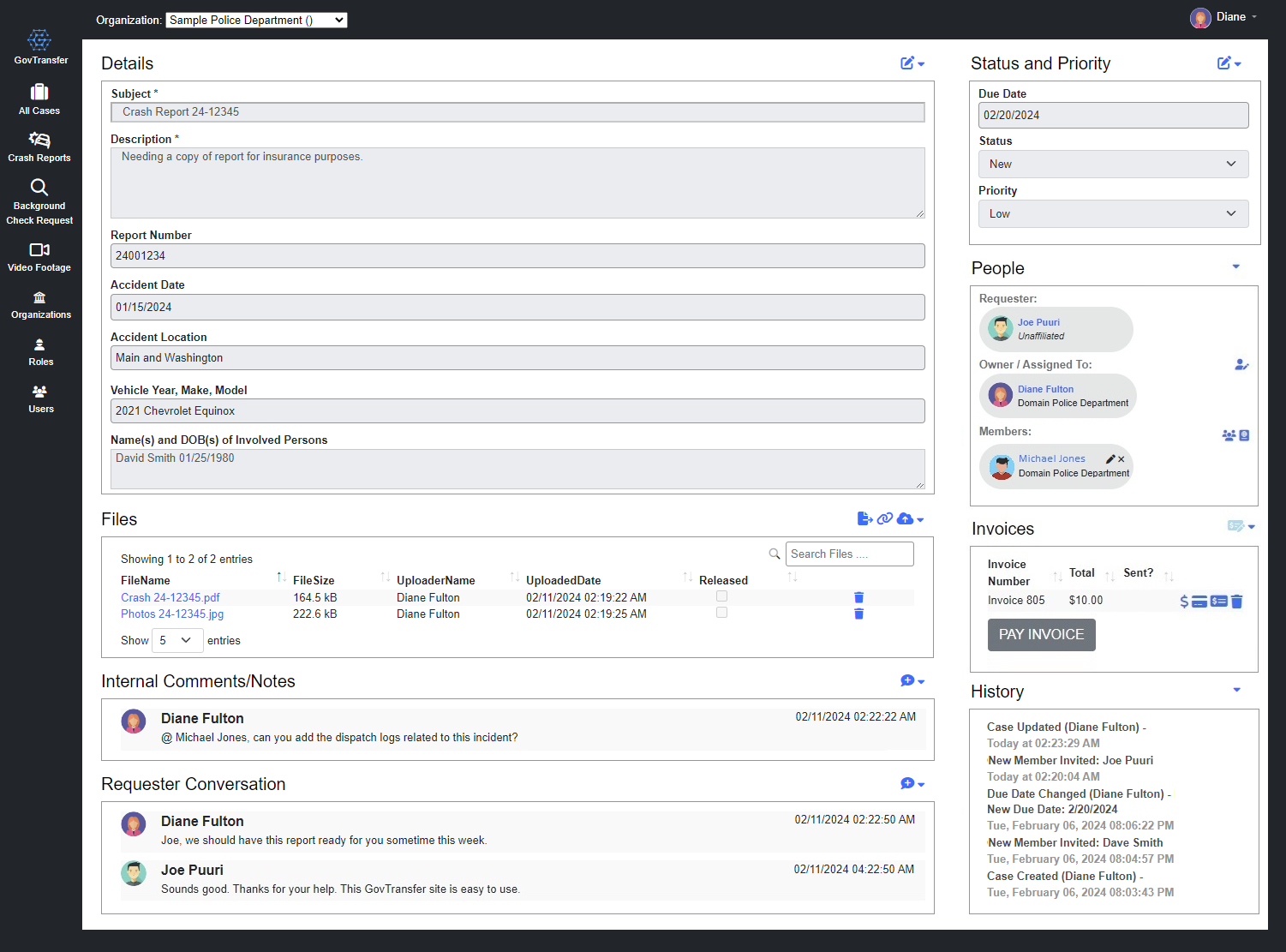
In today’s fast-moving public sector, agencies must exchange sensitive data quickly, accurately, and in full compliance with federal regulations. Traditional email attachments or ad-hoc FTP sites expose information to interception, version-control chaos, and audit-trail gaps. A purpose-built inter-agency file transfer solution removes those obstacles, delivering end-to-end encryption, granular access controls, and automated compliance reporting, all while keeping the user experience straightforward enough for non-technical staff. The result is a collaborative environment where security and efficiency coexist without compromise.
Key Benefits of a Dedicated Inter-Agency Transfer Platform
Robust Security Controls
- Transport-level TLS 1.3 encryption combined with at-rest AES-256 protects data throughout its lifecycle.
- Role-based permissions ensure that only authorized personnel can view, edit, or forward files.
- Multi-factor authentication (MFA) adds an extra layer of identity verification for every transfer.
Regulatory Compliance Made Automatic
- Built-in support for NIST SP 800-53, FIPS 140-2, and other federal standards eliminates the need for custom policy scripts.
- Comprehensive audit logs capture who accessed what, when, and from which endpoint, satisfying OMB and GAO reporting requirements.
- Retention policies can be configured to automatically purge or archive files in line with agency directives.
Operational Efficiency
- Drag-and-drop web interface reduces training time and accelerates file hand-offs.
- Automated notifications keep stakeholders informed without manual email chains.
- Integration hooks for popular government SaaS tools (e.g., SharePoint, GovCloud) streamline workflows.
Implementation Considerations
Scalability and Performance
A solution must handle peak loads during emergency response or large-scale data migrations. Look for platforms that support horizontal scaling across regional data centers, ensuring low latency and high availability. For agencies with legacy systems, a hybrid approach, combining on-premises gateways with cloud-based routing, can preserve existing investments while gaining modern capabilities.
Interoperability with Existing Governance Frameworks
When evaluating vendors, verify that the solution aligns with current agency policies on data classification, retention, and incident response. Compatibility with existing identity providers (e.g., Azure AD, LDAP) simplifies user provisioning and reduces administrative overhead. Detailed documentation and API references are essential for custom integrations.
Cost Management
Total cost of ownership includes licensing, infrastructure, and support. Many providers offer tiered pricing based on file volume or user count, allowing agencies to start small and expand as demand grows. Conduct a cost-benefit analysis that weighs reduced manual effort and risk mitigation against subscription fees.
Best Practices for Secure Collaboration
- Enforce strict password policies and mandatory MFA for all external partners.
- Classify data before transfer and apply the highest appropriate encryption level.
- Schedule regular reviews of access rights to prevent privilege creep.
- Utilize automated expiration dates on shared links to limit exposure.
- Maintain a documented incident-response playbook that includes file-transfer breach scenarios.
For agencies seeking a roadmap to modernize their data-exchange processes, Discover expert strategies here provides a solid starting point. Detailed case studies illustrate how similar organizations reduced transfer errors by over 40% while meeting stringent security mandates.
Choosing the Right Partner
Selecting a vendor should be guided by more than feature lists. Evaluate the provider’s track record in the public sector, their commitment to continuous security updates, and the availability of dedicated support teams familiar with government workflows. Independent third-party certifications (e.g., FedRAMP, ISO 27001) serve as reliable indicators of a mature security posture.
Additional insight into evaluating solutions can be found in the guide Learn about our tailored solutions. It outlines a step-by-step assessment framework that aligns technical requirements with policy objectives.
Future-Proofing Inter-Agency Collaboration
As data volumes grow and emerging technologies such as AI-driven analytics become integral to decision-making, the underlying transfer infrastructure must evolve. Look for platforms that support:
- API-first architectures for seamless integration with next-gen analytics pipelines.
- Zero-trust networking principles that verify every transaction regardless of location.
- Quantum-resistant encryption algorithms as standards mature.
Staying ahead of the curve ensures that agencies can adopt innovative tools without compromising the security foundations already in place. For forward-looking strategies, Explore advanced guides and tips offers a curated collection of resources on emerging standards and implementation tactics.
Conclusion
Secure, efficient inter-agency file transfer is no longer a luxury, it is a necessity for modern governance. By leveraging a dedicated solution that blends strong encryption, automated compliance, and user-centric design, agencies can foster collaboration while safeguarding the public’s trust. The journey begins with a clear understanding of requirements, a disciplined evaluation process, and the adoption of best practices that keep security at the forefront. For further reading and practical recommendations, Find out more about this approach and begin building a resilient data-exchange ecosystem today.